Spot fake gold using a lemon, a simple home test for gold that you can do right away.
The mild citric acid that lemon contains with help discover any base metals that may be hiding under the surface. This specific method involves creating a small scratch on an inconspicuous part of the gold item and then dipping it in lemon juice to observe any reactions.
Scratching helps expose any underlying metals if the piece is gold-plated or an alloy. Keep in mind that while this method can help identify some fake gold items, it’s not 100% conclusive, because thick gold plated items might still pass this test.
What You’ll Need
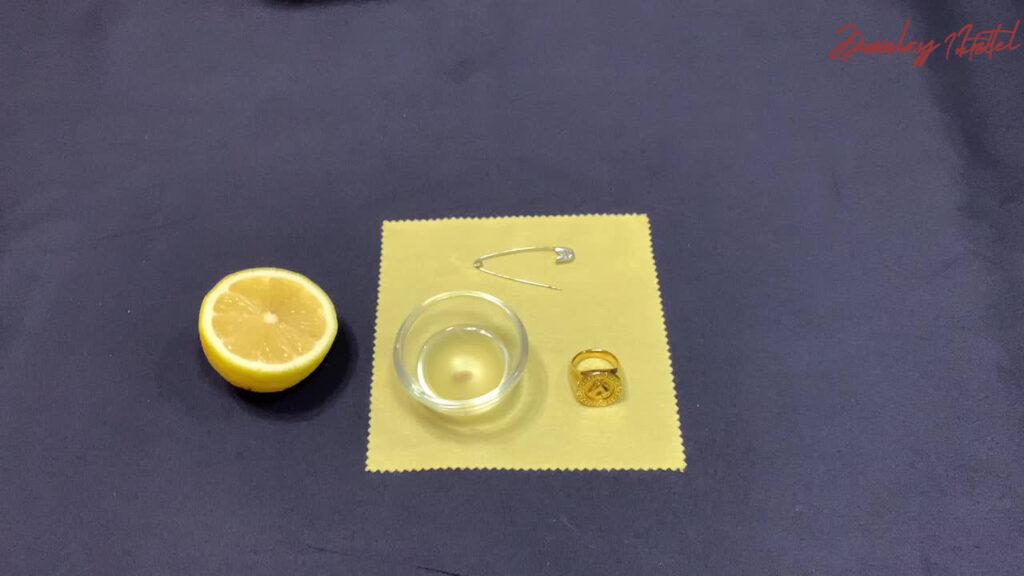
- Fresh lemon or lemon juice
- Small bowl or cup for lemon juice
- Scratch tool (a needle, pin, or fine-grit sandpaper)
- Soft toothbrush or cotton swab
- Bowl of warm water for rinsing
- Soft towel for drying
Precautions to Take
- Only Scratch a Small, Hidden Area: Scratching will leave a small mark, so make sure you choose an inconspicuous area, such as the back or underside of the piece.
- Avoid Scratching Valuable or Antique Items: If your gold item is of high value or sentimental worth, consider a non-damaging method or consult a professional jeweler instead.
- Be Mindful of Plated Items: This test can quickly damage gold-plated jewelry, as scratching can remove the plating and expose the base metal. If you suspect your piece is plated, use a different test to avoid damaging it.
- Limit Exposure to Lemon Juice: Acidic lemon juice may tarnish certain base metals, so be mindful of how long you leave your item in the solution to avoid unnecessary wear.
Step-by-Step Instructions
Step 1: Prepare the Lemon Juice
Squeeze fresh lemon juice into a bowl or cup. If using bottled lemon juice, pour a small amount (about 1–2 tablespoons) into the container. You don’t need a large amount, just enough to cover the scratched area of the gold item when dipped.
Step 2: Create a Small Scratch
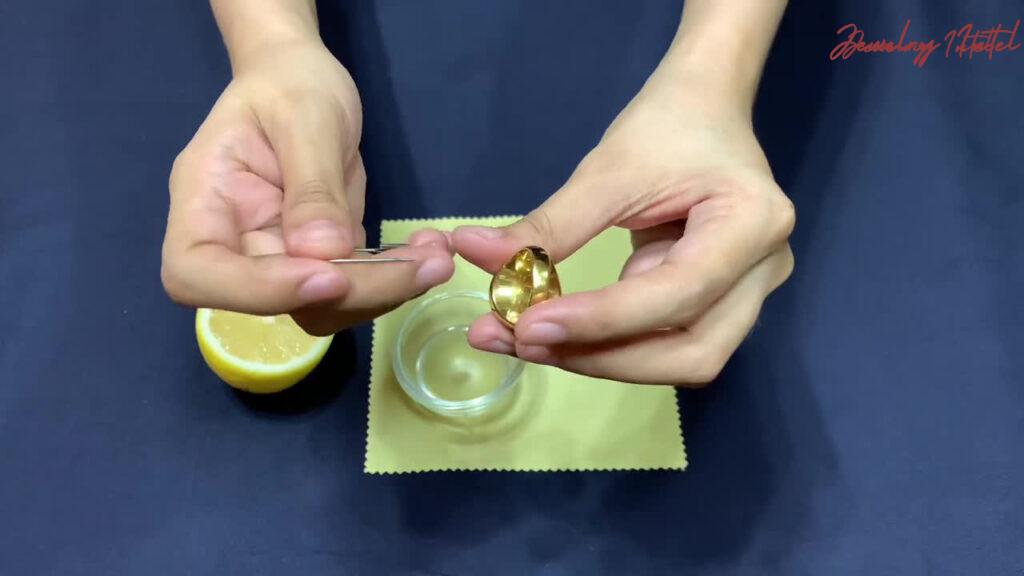
Using a fine needle, pin, or fine-grit sandpaper, gently scratch a small, hidden area of the gold item. The scratch should be shallow, just enough to expose any underlying metal if it’s present. Be careful not to make the scratch too large, as this is mainly to reveal any hidden base metals below the surface.
Step 3: Dip the Scratched Area in Lemon Juice
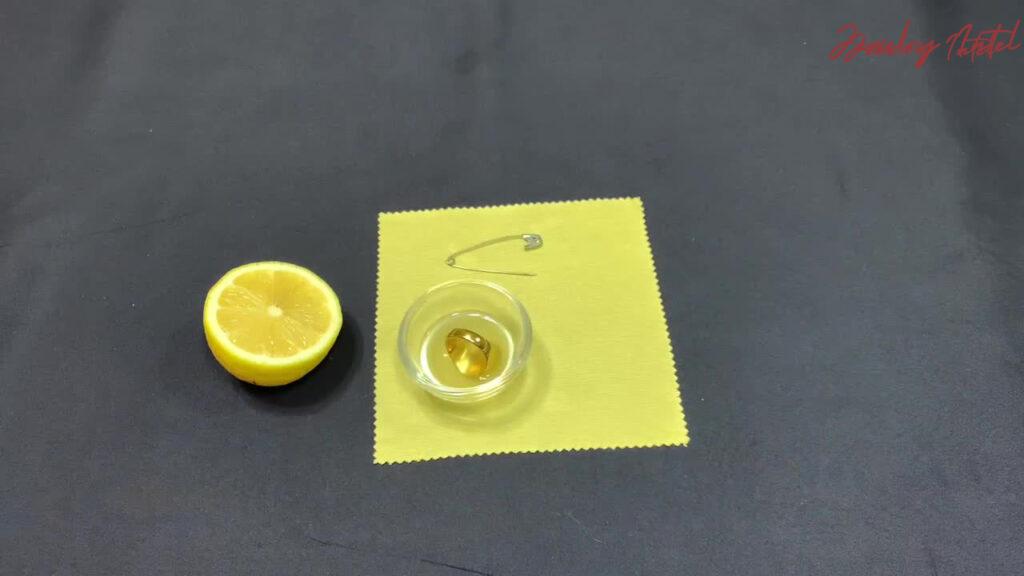
Once scratched, dip the gold item so that the scratched area is fully submerged in the lemon juice. Allow it to sit in the lemon juice for about 2–3 minutes. You should not need more time, as this is usually enough for the acid to interact with any reactive base metals if they’re present.
Step 4: Observe the Reaction
During the dip, pay attention to the scratched area for any signs of a reaction:
- Real Gold: Gold is a stable metal that should not react to lemon juice. If your item is real gold, there should be no visible changes such as bubbling, tarnishing, or discoloration.
- Fake or Alloyed Gold: If you see bubbling, discoloration, or tarnish on the scratched area, it’s a likely indication that the item contains base metals, such as brass, copper, or nickel. These metals react with the acid in lemon juice and may show visible changes.
Step 5: Rinse Thoroughly
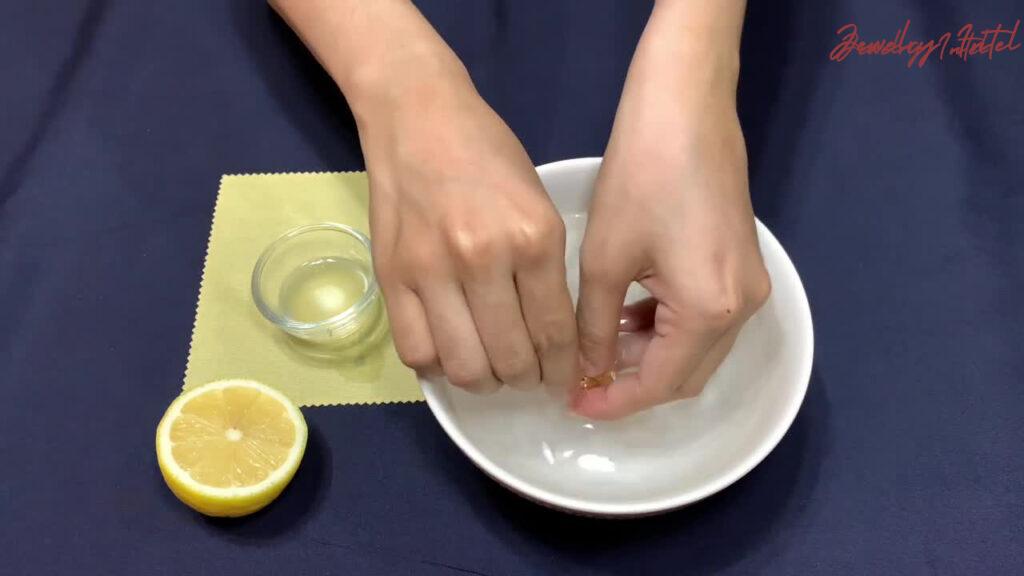
After observing the reaction, remove the gold item from the lemon juice and rinse it in a bowl containing lukewarm water. Rinsing removes any residual acid that could otherwise lead to tarnish or damage over time.
Step 6: Dry and Buff the Piece
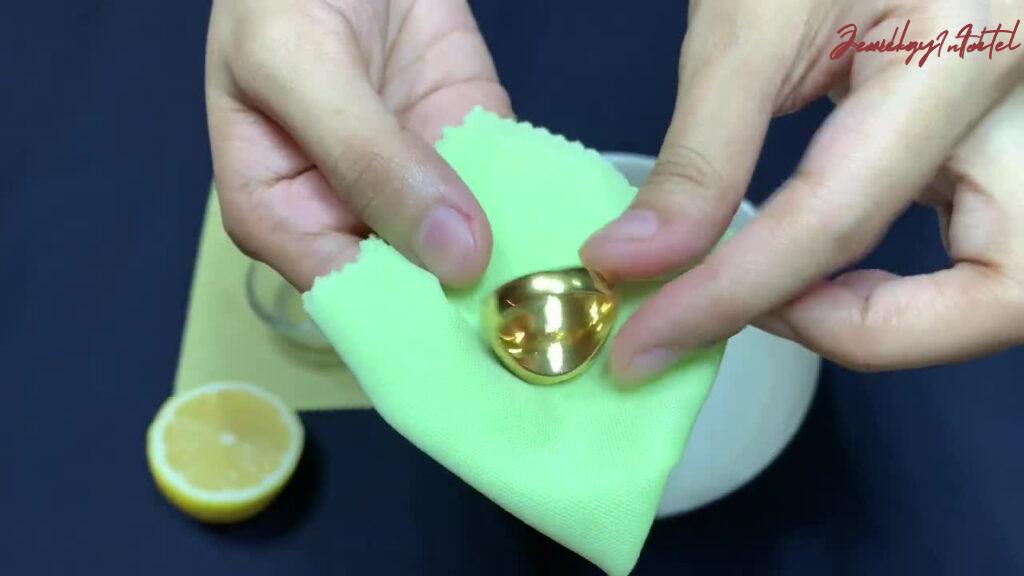
Gently pat the gold item dry with a soft towel, then use a clean, soft cloth to polish and restore its shine. This helps remove any remaining lemon juice or smudges, leaving your item looking clean and bright.
Interpreting the Results
- No Reaction: If there’s no visible change or discoloration in the scratched area, this is a positive sign that your item may be real gold, as pure gold is chemically resistant to mild acids.
- Visible Reaction (Tarnish, Bubbling, or Color Change): If you notice a reaction in the scratched area, such as tarnishing, bubbling, or discoloration, it’s likely the item is made from base metals or a gold-plated alloy. This suggests the item may not be pure gold.
Tips and Tricks
- Combine with Other Tests for Greater Accuracy: The scratch-and-dip lemon test can be helpful, but it’s not conclusive. For a more comprehensive check, consider combining this test with a magnet test (since real gold is non-magnetic) or a scratch test with a jeweler’s kit if you have one.
- Use Baking Soda to Neutralize Acid: If you notice any tarnish or reaction, you can neutralize the acidity by applying a paste made of baking soda and water to the scratched area. Rub gently, rinse, and dry to remove the effects of the acid.
- Limit Scratching on Gold Alloys: If your piece is a lower-karat gold alloy (like 10K or 14K), it may contain small amounts of base metals that can cause minor reactions. Be cautious of interpreting slight tarnish on lower-karat items as a definitive sign of a fake.
- Avoid Repeated Testing with Acid: Lemon juice is mild but still acidic, and repeated exposure can degrade even stable metals over time. Use this test sparingly and only as a preliminary check.
Conclusion
This simple home test for spotting fake gold using a lemon is effective – but may not be 100% accurate.
For items that you want to be sure, beyond just your curiosity, use different gold-testing methods like baking soda, magnet etc. For gold items that are important, or you want to sell or buy, get those evaluated by a professional jeweler.
Leave a Reply
You must be logged in to post a comment.